CrossFit Level 3 Study Guide: A Comprehensive Plan
Embark on an intensive journey, mastering functional movements, high-intensity training, and nuanced program design – a cornerstone for elite CrossFit coaching success.
This guide prepares trainers for advanced certification, emphasizing safety, effective cueing, and a deep understanding of the CrossFit methodology’s evolving landscape.

The CrossFit Level 3 (L3) Certification represents a significant milestone for dedicated CrossFit professionals. It’s designed for experienced trainers seeking to refine their coaching expertise and deepen their understanding of the methodology. This isn’t simply about advanced workouts; it’s about mastering the ‘why’ behind CrossFit, enabling you to effectively guide athletes of all levels.
Building upon the foundations of L1 and L2, the L3 dives into complex program design, nuanced movement analysis, and the art of individualized coaching. The certification process rigorously evaluates a trainer’s ability to apply CrossFit principles safely and effectively. As of March 23, 2026, the competitive CrossFit season is in full swing, highlighting the need for coaches who can prepare athletes for diverse challenges.
Successfully completing the L3 demonstrates a commitment to upholding the high standards of CrossFit, contributing to a thriving community, and fostering long-term athlete development. It signifies a coach’s ability to not only deliver workouts but to cultivate a sustainable fitness journey.
II. Prerequisites for Level 3
Before embarking on the CrossFit Level 3 journey, several prerequisites must be met to ensure candidate readiness. Firstly, and fundamentally, you must hold a valid CrossFit Level 1 Trainer certificate – this is non-negotiable. Secondly, successful completion of the CrossFit Level 2 Trainer certification is also mandatory, demonstrating a foundational understanding of coaching principles.
Beyond certifications, practical experience is crucial. Applicants must actively hold a current CrossFit Trainer certificate. While not explicitly stated as a requirement, a substantial coaching background – ideally several years – is highly recommended to effectively navigate the complexities of the L3 curriculum.
Furthermore, a strong grasp of functional movements, Olympic weightlifting, and gymnastics is essential, as the L3 assessment heavily emphasizes movement standards. Finally, candidates should be prepared to demonstrate a commitment to the CrossFit methodology and its core values, reflecting a dedication to athlete well-being and continuous improvement.
III. Understanding the CrossFit Methodology
At its core, CrossFit is a branded fitness regimen built upon constantly varied functional movements executed at high intensity. This isn’t random exercise; it’s a deliberate system designed to improve broad physiological capacities – strength, stamina, endurance, flexibility, power, and speed. Understanding this holistic approach is paramount for Level 3 certification.
The methodology prioritizes movements mirroring real-life activities, emphasizing multi-joint exercises like squatting, lifting, running, and jumping. This ‘functional’ aspect is key. High-intensity isn’t simply about going fast; it’s about maximizing work output within a given timeframe, appropriately scaled to individual capacity.
Level 3 trainers must demonstrate a comprehensive grasp of these principles, recognizing how they interrelate and influence program design. A deep understanding of CrossFit’s theoretical underpinnings is crucial for effective coaching and athlete development.
III.A. Core Principles of CrossFit
CrossFit’s foundation rests on several interconnected principles. Elite fitness is defined as competency across ten general physical skills: endurance, stamina, strength, power, speed, coordination, agility, balance, accuracy, and flexibility. Training programs should address all these areas, avoiding specialization at the expense of overall fitness.
Constant variation is another cornerstone, preventing adaptation and promoting continuous improvement. Workouts should be diverse, challenging the body in new ways. High-intensity, properly scaled, drives physiological adaptation. Functional movements, mirroring real-life mechanics, are prioritized over isolation exercises.
Furthermore, a community-driven environment fosters motivation and accountability. Level 3 certification demands a thorough understanding of how these principles work synergistically to deliver optimal results and a truly transformative fitness experience.
III.B. Functional Movements
Functional movements are the bedrock of CrossFit, emphasizing compound, multi-joint exercises that replicate natural human movement patterns. These movements – squatting, lifting, pushing, pulling, and rotating – are universally applicable and build transferable strength and conditioning. They prioritize efficiency and prepare the body for real-world tasks.
Understanding movement mechanics is crucial. Level 3 trainers must dissect these movements, identifying key muscle engagement and potential points of failure. Proper technique isn’t merely about completing the exercise; it’s about maximizing efficiency and minimizing injury risk. Movements like squatting, weightlifting, running, jumping, and more are foundational.
Proficiency requires recognizing variations and scaling options to accommodate diverse athlete abilities. A deep understanding of biomechanics allows for effective coaching and ensures safe, effective training for all levels.
III.C. High-Intensity Training
High-intensity training is a defining characteristic of CrossFit, but it’s not simply about going fast. It’s about maximizing power output within a given timeframe, demanding significant physiological adaptation. Level 3 trainers must understand the science behind intensity and its impact on metabolic pathways.
Properly applying intensity requires careful consideration of volume, rest, and athlete capacity. Knowing when to push and when to scale is paramount for safety and effectiveness. Workouts are constantly varied, preventing plateaus and continually challenging the body.
Intensity is relative; what’s high-intensity for one athlete may not be for another. Effective coaching involves tailoring workouts to individual fitness levels and monitoring athlete response to ensure optimal results and minimize risk of overtraining.
IV. Movement Standards & Technique
Mastery of movement standards is crucial for Level 3 CrossFit trainers. This extends beyond personal proficiency to the ability to accurately assess and correct athlete technique. Expect a deep dive into Olympic weightlifting – the Snatch and Clean & Jerk – demanding precise understanding of mechanics and common errors.
Gymnastics movements, like pull-ups, muscle-ups, and toes-to-bar, require a keen eye for proper form and scaling options. Powerlifting staples – the Squat, Deadlift, and Bench Press – necessitate knowledge of safe and effective progression.

Trainers must be able to differentiate between acceptable variations and technique flaws that increase injury risk. The ability to provide clear, concise cues and regressions is essential for fostering safe and effective movement patterns across all skill levels.
IV.A. Olympic Weightlifting (Snatch & Clean & Jerk)
A comprehensive understanding of the Snatch and Clean & Jerk is paramount for Level 3 certification. This includes dissecting each lift’s phases – from setup and pull to turnover and catch – identifying common technical breakdowns at each stage. Expect detailed analysis of proper bar path, receiving positions, and footwork.
Trainers must demonstrate the ability to coach these complex movements safely and effectively, offering regressions and progressions tailored to individual athlete capabilities. Understanding variations like power variations and muscle snatches is also vital.
Beyond technique, a solid grasp of mobility requirements and potential injury mechanisms is essential. The ability to diagnose and correct faults in real-time, providing targeted cues, will be heavily assessed.
IV.B. Gymnastics Movements (Pull-ups, Muscle-ups, Toes-to-Bar)
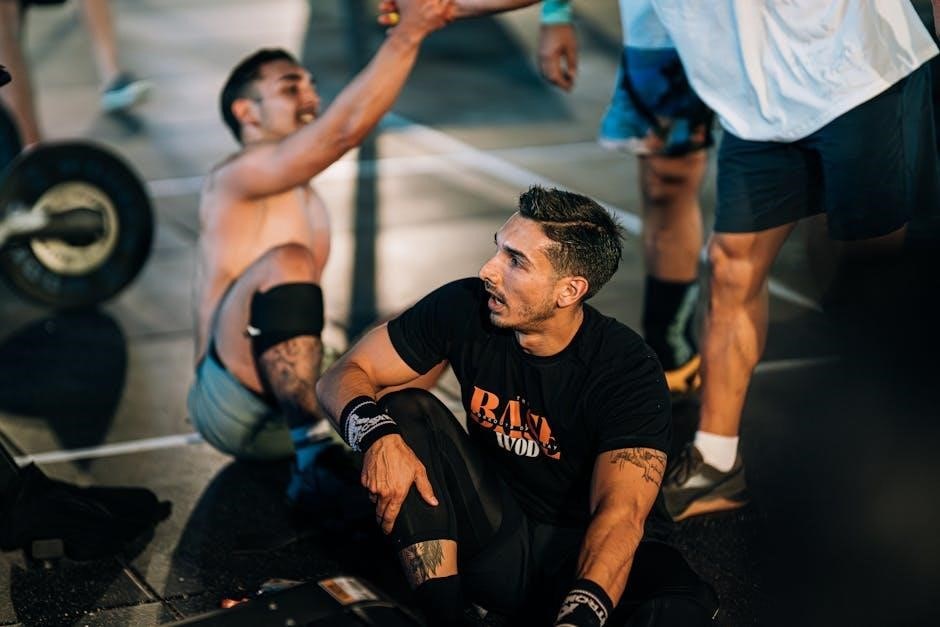
Mastery of gymnastics skills is crucial, demanding a deep understanding of progressions and regressions for movements like pull-ups, muscle-ups, and toes-to-bar. Level 3 trainers must be able to break down these skills into manageable components, addressing strength, technique, and mobility limitations.
Expect to demonstrate proficiency in identifying common errors – kipping mechanics, hollow body positioning, and grip strength – and providing effective corrective cues. Scaling options for varying athlete levels are essential, ensuring safe and effective participation.
Furthermore, a thorough knowledge of injury prevention strategies related to shoulder health, grip fatigue, and core stability is vital. The ability to coach these movements with a focus on proper form and controlled execution will be rigorously evaluated.
IV.C. Powerlifting (Squat, Deadlift, Bench Press)
A comprehensive understanding of the “big three” – squat, deadlift, and bench press – is paramount for Level 3 certification. Trainers must demonstrate expertise in proper lifting technique, biomechanics, and common fault corrections for each movement.
Expect detailed questioning on cueing progressions, addressing individual mobility restrictions, and scaling options for athletes of all levels. The ability to identify and mitigate risks associated with heavy lifting is critical, emphasizing safety protocols and appropriate weight selection.
Beyond technique, trainers should grasp the role of these lifts within a broader CrossFit program, understanding how they contribute to overall strength and conditioning. Knowledge of variations and accessory exercises to address weaknesses will also be assessed.

V. Program Design & Periodization
Level 3 trainers must exhibit mastery in crafting effective workouts (WODs) that align with specific athlete goals and fitness levels. This includes understanding principles of stimulus, recovery, and progressive overload. Expect scenarios requiring you to build WODs based on given parameters and athlete profiles.
Scaling and modification are crucial skills; you’ll need to demonstrate the ability to adapt workouts for diverse abilities, injuries, and equipment limitations. A deep understanding of movement substitutions and intensity adjustments is essential.
Periodization strategies – linear, undulating, and block – will be thoroughly examined. You must articulate how to structure training over time to optimize long-term progress, prevent plateaus, and manage fatigue effectively.
V.A. Building Effective Workouts (WODs)
Constructing impactful WODs requires a nuanced understanding of CrossFit’s core principles – constantly varied functional movements executed at high intensity. Level 3 trainers must demonstrate the ability to select exercises that elicit a specific physiological response, considering energy systems and movement patterns.
WOD design isn’t random; it’s a strategic process. You’ll need to articulate the rationale behind exercise choices, rep schemes, and workout structure. Understanding how to manipulate these variables to target specific fitness qualities (strength, power, endurance) is vital.
Expect to analyze existing WODs, identifying strengths and weaknesses, and proposing modifications to enhance their effectiveness. The ability to create scalable and time-efficient workouts is paramount for coaching success.
V.B. Scaling & Modification for Athletes
A hallmark of a skilled CrossFit coach is the ability to adapt workouts to individual athlete needs. Scaling isn’t simply “making it easier”; it’s preserving the intended stimulus while accommodating varying skill levels, experience, and physical limitations.
Level 3 certification demands proficiency in modifying movements – offering regressions for complex exercises (like muscle-ups to jumping pull-ups) and progressions for those who’ve mastered the basics. Understanding movement mechanics is crucial for safe and effective scaling.
You’ll be expected to identify movement faults and provide targeted modifications to address them. This includes adjusting load, range of motion, or even substituting exercises entirely. Prioritizing athlete safety and maintaining workout integrity are key.
V.C. Periodization Strategies for Long-Term Progress
Effective CrossFit programming extends beyond daily WODs; it requires a strategic, long-term plan. Level 3 coaches must demonstrate a comprehensive understanding of periodization – systematically varying training volume and intensity to optimize adaptation and prevent plateaus.
This involves understanding different periodization models, such as linear, undulating, and block periodization, and knowing when to apply each. Coaches should be able to design programs that build towards specific goals, like competition preparation or general fitness improvement;
Crucially, periodization isn’t rigid. It requires constant monitoring of athlete response and adjustments based on individual needs and progress. Understanding recovery, fatigue management, and the principles of progressive overload are essential components.
VI. Coaching & Instruction
Level 3 CrossFit coaching transcends simply leading a workout; it’s about fostering athlete development through expert instruction and individualized attention. Coaches must demonstrate mastery of effective communication, precise cueing, and constructive feedback techniques.
A key component is movement analysis – the ability to identify technical flaws and provide targeted corrections to enhance efficiency and minimize injury risk. This requires a deep understanding of biomechanics and movement patterns.
Beyond technical skill, building rapport with clients is paramount. Creating a positive and supportive training environment, motivating athletes, and adapting coaching styles to individual personalities are crucial for long-term engagement and success.
VI.A. Effective Cueing & Feedback
Masterful cueing is the hallmark of a Level 3 CrossFit coach, moving beyond generic instructions to provide specific, actionable guidance. Cues should be concise, focused on one element at a time, and tailored to the athlete’s individual needs and learning style.
Feedback must be both constructive and encouraging, highlighting areas for improvement while reinforcing positive movement patterns. Avoid overly critical language; instead, focus on solutions and offer positive reinforcement.
Effective feedback is timely and specific, delivered immediately after the movement and referencing observable actions. Coaches should learn to differentiate between technical errors and strategic choices, offering guidance accordingly.
Ultimately, the goal is to empower athletes to self-correct and develop a deeper understanding of proper movement mechanics.
VI.B. Movement Analysis & Correction
Level 3 coaches possess a refined ability to analyze movement patterns, identifying subtle inefficiencies and potential risks. This goes beyond simply spotting “wrong” form; it requires understanding biomechanics and recognizing deviations from optimal technique.
Correction strategies should be progressive and individualized, starting with verbal cues and progressing to tactile guidance only when necessary. Avoid forceful manipulation, prioritizing athlete safety and autonomy.
A systematic approach is crucial: observe the movement, identify the error, determine the underlying cause, and then implement a targeted correction.
Coaches must also understand how to scale movements appropriately to accommodate individual limitations and prevent injury, ensuring all athletes can participate safely and effectively.
VI.C. Building Rapport with Clients
Establishing strong rapport is paramount for a Level 3 coach. It transcends simply knowing names; it’s about fostering a trusting and supportive environment where athletes feel comfortable pushing their limits.
Effective communication is key: actively listen to concerns, provide empathetic feedback, and celebrate successes. Understand that each athlete has unique goals, motivations, and limitations.
A coach’s demeanor should be encouraging and approachable, creating a sense of community within the CrossFit box.
Genuine interest in an athlete’s overall well-being – not just their fitness – builds lasting relationships and promotes long-term adherence to a healthy lifestyle. This dedication fosters a thriving fitness community.
VII. Nutrition & Recovery

Optimal nutrition fuels performance and recovery in CrossFit athletes. A Level 3 coach understands macronutrient considerations – protein for muscle repair, carbohydrates for energy, and healthy fats for hormonal balance – tailoring guidance to individual needs.
Hydration is non-negotiable, impacting everything from performance to cognitive function. Coaches must emphasize consistent fluid intake before, during, and after workouts.
Recovery strategies are equally vital. Prioritizing sleep, incorporating mobility work, and utilizing active recovery techniques minimizes soreness and prevents overtraining.
Coaches should educate athletes on the importance of these elements, empowering them to make informed choices that support their fitness journey and overall health.
VII.A. Macronutrient Considerations for CrossFit Athletes
CrossFit’s high-intensity nature demands a nuanced understanding of macronutrient needs. Protein intake, typically 0.8-1.0 grams per pound of bodyweight, is crucial for muscle protein synthesis and repair following strenuous workouts.
Carbohydrates fuel performance, with recommendations varying based on training volume and intensity – ranging from moderate intake for recovery days to higher amounts for competition or heavy WODs.
Healthy fats support hormonal function and overall health, contributing to sustained energy levels. Prioritizing unsaturated fats from sources like avocados, nuts, and olive oil is key.
A Level 3 coach guides athletes in finding the right macronutrient balance, considering individual goals, body composition, and training demands, avoiding restrictive diets.
VII.B. Importance of Hydration
Hydration is paramount for CrossFit athletes, significantly impacting performance, recovery, and overall health. Intense workouts lead to substantial fluid loss through sweat, necessitating consistent replenishment.
Dehydration can quickly diminish strength, endurance, and cognitive function, increasing the risk of cramping and heat-related illnesses. Coaches must educate athletes on recognizing dehydration symptoms – thirst, fatigue, and dark urine.
Water is the primary hydration source, but electrolytes lost through sweat also require replacement. Electrolyte drinks or incorporating sodium-rich foods can aid in maintaining fluid balance.
A Level 3 coach emphasizes proactive hydration strategies, encouraging athletes to drink consistently throughout the day, not just during workouts, and tailoring intake to individual needs.
VII.C. Recovery Strategies (Sleep, Mobility, Active Recovery)
Optimal recovery is crucial for CrossFit athletes to adapt to training stress and prevent overtraining. A Level 3 coach understands and advocates for a holistic approach encompassing sleep, mobility, and active recovery.
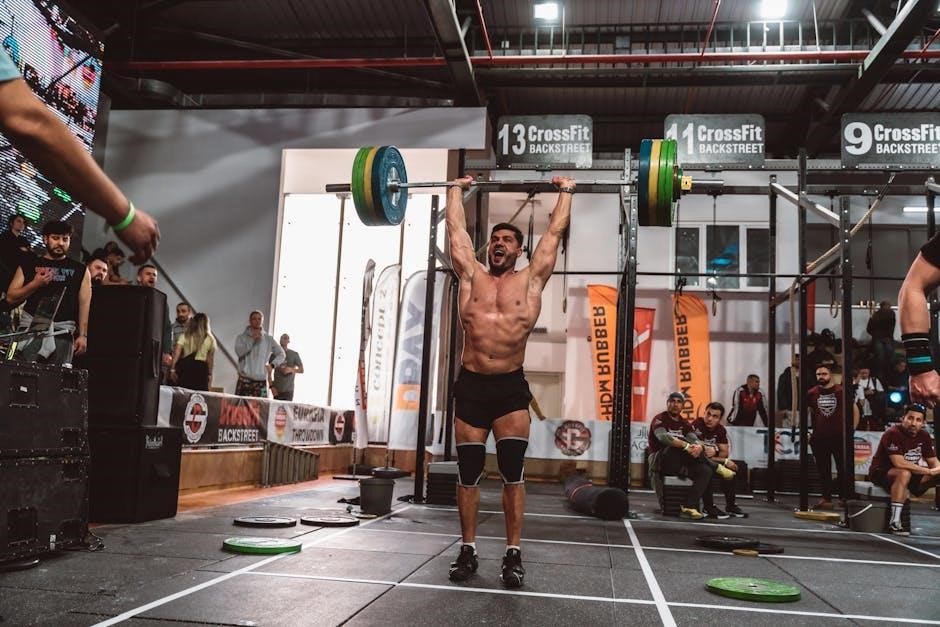
Prioritizing 7-9 hours of quality sleep nightly is fundamental, as sleep is when the body repairs muscle tissue and replenishes energy stores. Mobility work – stretching and range-of-motion exercises – improves movement efficiency and reduces injury risk.
Active recovery, such as light cardio or foam rolling, promotes blood flow and reduces muscle soreness without imposing additional stress. Coaches should guide athletes in creating personalized recovery plans.
Effective recovery isn’t simply rest; it’s strategic intervention to maximize adaptation and sustain long-term progress, a key component of advanced coaching.
VIII. CrossFit Competition & The Sport
A Level 3 coach possesses a comprehensive understanding of the competitive CrossFit landscape, from the Open to the CrossFit Games. This includes knowledge of event structures, scoring, and athlete qualification pathways.
The season progresses through the Open (initial qualifying stage), Quarterfinals (second stage, recently reinstated), Semifinals (in-person or online), and culminates in the CrossFit Games; Coaches must understand how these stages function.

Competition workouts are notoriously varied, testing broad fitness domains – weightlifting, gymnastics, metabolic conditioning. Strategies for pacing, transitions, and movement selection are vital.
Coaches should be able to analyze workout demands, predict athlete performance, and provide guidance on competition preparation, fostering a competitive spirit within ethical boundaries.
VIII.A. Understanding the CrossFit Games Season (Open, Quarterfinals, Semifinals, Games)
A Level 3 coach must demonstrate mastery of the CrossFit Games season’s structure. The Open serves as the initial worldwide qualifying event, testing athletes with released workouts over several weeks.
The Quarterfinals, recently reintroduced after a hiatus, act as a crucial second stage, narrowing the field for Semifinal contention. These events utilize online or in-person formats.
Semifinals represent regional competitions, offering direct qualification pathways to the Games. Performance here is paramount, demanding strategic preparation and peak physical condition.
Finally, the CrossFit Games crown the “Fittest on Earth.” Understanding the progression, scoring, and logistical elements of each stage is essential for coaching athletes aiming for elite competition.
VIII.B. Common Competition Workouts & Strategies
Level 3 coaches need a deep understanding of typical CrossFit competition workout structures. Expect combinations of weightlifting, gymnastics, and metabolic conditioning – often performed for time or rounds.
Common movements include squatting, weightlifting (Snatch, Clean & Jerk), running, jumping, pull-ups, muscle-ups, and toes-to-bar. Workouts frequently test broad, general, and inclusive fitness.
Strategic considerations are vital. Pacing, transition efficiency, and movement scaling are crucial for success. Coaches must teach athletes to assess workout demands and adjust accordingly.
Effective strategies involve breaking down complex movements, optimizing work-to-rest ratios, and minimizing wasted energy. Understanding how to prepare athletes for varied and demanding tests is key.
IX. Safety & Risk Management
A Level 3 coach prioritizes athlete safety above all else. This involves comprehensive injury prevention strategies, including proper warm-up protocols, movement mechanics instruction, and load management techniques.
Risk assessment is paramount. Coaches must identify potential hazards within workouts and modify exercises to suit individual athlete capabilities. Scaling and appropriate modifications are essential tools.
Emergency preparedness is critical. Level 3 coaches must be proficient in emergency procedures, including first aid and CPR. Knowing how to respond to injuries and medical events is non-negotiable.
Proactive safety measures, clear communication, and a vigilant coaching eye minimize risk. Creating a safe training environment fosters trust and allows athletes to progress confidently.
IX.A. Injury Prevention Strategies

Effective injury prevention begins with a thorough understanding of movement biomechanics and common CrossFit-related injuries. Coaches must be able to identify movement faults that predispose athletes to risk.
Progressive overload is key. Avoid rapid increases in intensity or volume. Implement a gradual progression that allows the body to adapt. Proper warm-up routines, including dynamic stretching and mobility work, prepare muscles and joints for activity.
Emphasis on technique is crucial. Prioritize quality of movement over weight or speed. Consistent cueing and feedback help athletes maintain proper form. Encourage athletes to listen to their bodies and report any pain or discomfort.
Cool-down routines and post-workout recovery strategies, like static stretching, aid in muscle recovery and reduce soreness, further minimizing injury risk.

IX.B. Emergency Procedures & First Aid
Level 3 coaches must demonstrate proficiency in emergency response. This includes recognizing signs of medical distress – cardiac events, heatstroke, or acute injuries – and initiating appropriate action immediately.
A well-defined Emergency Action Plan (EAP) is essential. This plan should outline procedures for contacting emergency medical services (EMS), providing basic first aid, and managing the scene until professional help arrives.
CPR/AED certification is non-negotiable. Coaches should be current on these life-saving skills. Knowledge of basic wound care, fracture immobilization, and managing common athletic injuries is also vital.
Maintaining a fully stocked first-aid kit and knowing its contents is paramount. Regular drills and scenario-based training enhance preparedness and ensure a swift, effective response in critical situations.
X. The CrossFit Community & Culture
Understanding CrossFit’s unique culture is crucial for a Level 3 coach. It’s more than just fitness; it’s a global community built on encouragement, support, and shared challenges. Coaches are expected to foster this environment within their affiliate boxes.
The spirit of CrossFit emphasizes inclusivity and scaling workouts to accommodate all fitness levels. Level 3 certification requires demonstrating an ability to build rapport with diverse clients and motivate them to achieve their personal best.
Recognizing the historical context – from Greg Glassman’s founding principles to the evolution of the CrossFit Games – provides valuable insight.
Coaches serve as ambassadors, upholding the brand’s values and contributing to the positive growth of the CrossFit movement worldwide, promoting a sense of belonging.