AQA English Language Revision Guide
Welcome to your comprehensive AQA English Language revision resource! This guide consolidates key information,
covering assessment overviews, exam techniques, and specific text analysis. Prepare effectively using PMT resources
and AQA past papers for optimal success in your GCSE (9-1) examinations.
Explore detailed notes, character profiles, and theme guides, alongside essay writing support. Enhance your skills
and confidence with focused preparation for both Paper 1 and Paper 2, ensuring a thorough understanding of
the course content and exam requirements.
Embarking on your AQA GCSE English Language (9-1) journey? This course cultivates essential skills in reading, writing, and critical thinking.
You’ll explore diverse texts – fiction and non-fiction – analysing language, structure, and perspectives. The qualification aims to equip you with
the ability to communicate effectively and confidently, preparing you for further education and future careers.
The AQA specification emphasizes a robust understanding of literary techniques and rhetorical devices. Expect to encounter challenging texts
requiring close analysis and insightful interpretation. Revision resources, like those from Physics and Maths Tutor (PMT), offer invaluable support,
providing summary notes, character profiles, and theme guides. Mastering these foundational elements is crucial for success. Remember, consistent
practice with past papers is key to familiarizing yourself with the exam format and refining your timing strategies.
Understanding the Assessment Overview
AQA GCSE English Language is assessed through two equally weighted papers: Paper 1 focuses on Explorations in Creative Reading and Writing,
contributing 50% to your final grade. Paper 2, Viewpoints and Perspectives, also accounts for 50%. Each paper comprises a reading section (40%)
and a writing section (40%), demanding proficiency in both analytical and creative skills.

Successful navigation requires understanding question types and mark schemes. PMT resources provide detailed exam and essay writing guides,
helping you decipher what examiners seek. Both papers are timed, emphasizing effective planning and time management. Familiarize yourself with
past papers – AQA provides access to these alongside mark schemes – to practice under exam conditions. Remember, consistent revision and targeted
practice are vital for maximizing your potential and achieving a strong outcome in your GCSE English Language assessment.
Paper 1: Explorations in Creative Reading and Writing
Paper 1 assesses your ability to creatively read and respond to fictional texts. Section A (40% of the paper) centers on reading comprehension,
requiring detailed analysis of language, structure, and the writer’s techniques. You’ll need to extract information and infer meaning from unseen
literary extracts. Section B (also 40%) challenges you to write creatively, often in response to a narrative or descriptive prompt.
PMT offers summary notes and guides to aid your understanding of key concepts. Effective preparation involves practicing both analytical and
creative writing skills. Focus on crafting compelling openings and endings, and developing coherent paragraphs. Remember to plan your responses
carefully, considering audience and purpose. Mastering these skills is crucial for success in Paper 1, demonstrating your ability to both interpret
and produce engaging written content.
Section A: Reading – Fiction (40% of Paper 1)
This section focuses on your analytical skills when encountering unseen fictional texts. You’ll be presented with a prose extract and asked a series of questions
designed to assess your understanding of its language, structure, and effects. Key skills include identifying literary techniques – such as imagery,
metaphor, and symbolism – and explaining how these contribute to the overall meaning.
PMT resources provide valuable support, offering guidance on analyzing language and structure. Practice extracting explicit and implicit information,
and developing insightful interpretations. Pay close attention to the writer’s choices and their intended impact on the reader. Remember to support
your answers with textual evidence, using precise quotations to illustrate your points. Mastering these techniques will maximize your score in this crucial section.
Section B: Writing – Creative Writing (40% of Paper 1)
This section tests your ability to produce compelling and imaginative creative writing; You’ll be given a prompt – often a narrative or descriptive scenario –
and asked to write a piece that responds to it. Success hinges on crafting an engaging opening, developing a coherent plot or vivid description, and
creating a satisfying conclusion.
Focus on using ambitious vocabulary and varied sentence structures to enhance your writing style. Consider how language techniques, such as imagery
and figurative language, can elevate your response. PMT resources offer guidance on crafting effective openings and endings, and developing strong paragraphs.
Practice planning your writing before you begin, ensuring a clear structure and logical flow of ideas. Remember to proofread carefully for errors in grammar and spelling.
Paper 2: Viewpoints and Perspectives
Paper 2 assesses your understanding of non-fiction texts and your ability to adopt a specific viewpoint in your writing. This paper focuses on how writers present perspectives,
construct arguments, and use language to influence readers. You’ll encounter two non-fiction sources, analyzing their content, structure, and the techniques employed.
The writing section requires you to produce a non-fiction piece – potentially an article, letter, or speech – responding to the presented viewpoints.
PMT resources provide valuable support for analyzing non-fiction texts and developing coherent arguments. Focus on understanding the author’s purpose and
intended audience. Practice constructing well-supported arguments and using persuasive language effectively. Remember to consider the context and audience
when crafting your response, tailoring your tone and style accordingly.
Section A: Reading – Non-Fiction (40% of Paper 2)
This section tests your analytical skills with two non-fiction texts. You’ll need to demonstrate a strong understanding of how writers present viewpoints and perspectives,
utilizing language and structural techniques to influence the reader. Key skills include identifying bias, analyzing tone, and evaluating the effectiveness of persuasive devices.
Expect questions focusing on explicit and implicit meanings, as well as the relationship between the texts. PMT resources offer summary notes and glossaries to aid comprehension.
Practice identifying key arguments and supporting evidence within each source. Consider the context of each text – when and where it was written, and for whom.
Focus on how the writer’s choices shape the reader’s understanding. Mastering these skills is crucial for achieving a high score in this section.

Section B: Writing – Non-Fiction (40% of Paper 2)
This section requires you to write a non-fiction piece based on provided sources. You’ll be assessed on your ability to synthesize information, present a clear viewpoint, and adapt your writing style for a specific purpose and audience. Expect prompts asking for articles, letters, or speeches.
Planning is essential; outline your arguments and structure before writing. Utilize evidence from the sources effectively, integrating it seamlessly into your own writing. Pay close attention to tone, formality, and persuasive techniques. PMT provides essay writing guides to help refine your approach.
Remember to craft a compelling opening and a strong conclusion. Practice writing under timed conditions to improve your speed and accuracy.

Key Reading Skills for AQA English Language
Developing strong reading skills is fundamental to success in AQA English Language. This involves more than just understanding the literal meaning of a text; it’s about analysing how the writer achieves their effects. Focus on identifying and interpreting language and structural techniques, such as imagery, metaphor, and sentence form.
Crucially, consider the writer’s perspective and intentions – what are they trying to convey, and why? How does their viewpoint shape the text? PMT offers summary notes and theme guides to aid comprehension. Practice close reading of diverse texts, actively annotating and questioning the writer’s choices. Understanding these elements will unlock deeper insights and improve your analytical writing.
Analysing Language and Structure
Mastering language and structural analysis is vital for AQA English Language. Identify key techniques like metaphors, similes, and personification, explaining their impact on meaning. Examine sentence structure – are sentences short and impactful, or long and complex? How does this contribute to the overall effect?
Consider the text’s organisation: how does the writer use paragraphs, shifts in focus, or repetition? Explore the use of imagery and symbolism, and how these elements reinforce themes. PMT resources provide glossaries to define literary terms. Practice pinpointing these techniques and explaining their significance, linking them directly to the writer’s purpose and the text’s overall message.
Understanding Writer’s Perspectives and Intentions
Deciphering a writer’s viewpoint is crucial for AQA success. Consider the context of the text – when was it written, and for whom? How might this influence the writer’s perspective? Identify any biases or assumptions present in the writing;
Explore the writer’s purpose: are they trying to persuade, inform, entertain, or provoke a reaction? Analyse the language used to understand how the writer conveys their message. PMT resources offer theme guides to aid understanding. Look for evidence of the writer’s values and beliefs. Ultimately, demonstrate your ability to interpret the text and articulate the writer’s intended effect on the reader.
Key Writing Skills for AQA English Language
Mastering writing techniques is vital for achieving top marks. Focus on crafting compelling openings that immediately engage the reader, and impactful endings that leave a lasting impression. Develop coherent paragraphs with clear topic sentences and supporting evidence.
Structure your arguments logically, using connectives to ensure smooth transitions between ideas. Vary your sentence structure and vocabulary to demonstrate linguistic range. Pay close attention to grammar, punctuation, and spelling – accuracy is key! Practice different writing styles, including narrative and non-fiction, to build versatility. Remember to tailor your writing to the specific prompt and audience.
Crafting Effective Openings and Endings
A strong opening immediately grabs the examiner’s attention. Consider using vivid imagery, a striking statement, or a compelling question to draw the reader in. Establish the tone and purpose of your writing from the outset. Avoid clichés and aim for originality.
Equally important is a memorable ending. Don’t simply restate your introduction; instead, offer a final thought, a resolution, or a lingering image. Create a sense of closure while leaving a lasting impact. Effective endings often echo the opening, providing a satisfying sense of completion. Practice crafting both types of openings and endings to refine your skills and maximize your potential.
Developing Coherent Paragraphs and Arguments
Coherent paragraphs are the building blocks of strong writing. Each paragraph should focus on a single, clear idea, directly supporting your overall argument. Begin with a topic sentence that introduces the main point, followed by supporting evidence and analysis. Use linking words and phrases – however, therefore, furthermore – to ensure a smooth flow between sentences.
Develop arguments logically, presenting evidence in a structured manner. Consider counterarguments and address them effectively. Avoid generalizations and support your claims with specific details. A well-developed argument demonstrates critical thinking and a thorough understanding of the topic. Practice structuring your ideas to create persuasive and well-reasoned responses.
Exam Technique: Planning and Time Management
Effective exam technique is crucial for success. Begin by carefully reading the question and identifying key demands. Allocate your time wisely, dedicating sufficient time to both reading and writing sections. Planning is essential – briefly outline your response before writing, structuring your ideas and identifying key evidence.
During the exam, stick to your plan and maintain a clear, concise writing style; Prioritize answering all parts of the question fully. Utilize timed practice to simulate exam conditions and improve your speed. Remember to review your work if time allows, checking for errors in grammar, spelling, and punctuation. PMT offers courses to improve exam technique!
Common AQA Exam Question Types – Paper 1
Paper 1 focuses on Explorations in Creative Reading and Writing. Expect questions demanding analysis of fiction extracts, assessing your understanding of language, structure, and writer’s techniques. Section A requires detailed textual interpretation, while Section B challenges your creative writing abilities.
Common prompts include Narrative Writing Prompts – crafting stories with compelling plots and characters – and Descriptive Writing Prompts, focusing on vivid imagery and sensory details. Practice responding to a range of prompts, experimenting with different narrative voices and perspectives. Remember to demonstrate your understanding of literary devices and employ them effectively in your writing.
Narrative Writing Prompts
Narrative prompts on Paper 1 demand storytelling prowess. These often present a scenario, image, or opening line, requiring you to construct a complete narrative with a clear plot, engaging characters, and a compelling resolution. Focus on developing a strong narrative voice and maintaining consistent tense throughout your writing.
Successful responses demonstrate skillful use of literary techniques – foreshadowing, suspense, dialogue – to create impact. Practice planning your stories before writing, considering character motivations and plot twists. Remember to show, don’t tell, using vivid descriptions and sensory details to immerse the reader. A well-structured narrative with a satisfying conclusion is key to achieving high marks.
Descriptive Writing Prompts
Descriptive writing prompts, also in Paper 1, assess your ability to create vivid imagery and evoke atmosphere. These prompts typically present a scene, object, or place, challenging you to describe it in detail, appealing to the reader’s senses. Mastering figurative language – similes, metaphors, personification – is crucial for success.
Focus on selecting precise and impactful vocabulary to convey your impressions effectively. Consider the mood and tone you wish to establish, and use language accordingly. Strong responses demonstrate a keen awareness of structure, building descriptions logically and creating a cohesive overall impression. Practice describing everyday scenes to hone your observational skills and descriptive techniques, aiming for originality and sensory richness.
Common AQA Exam Question Types – Paper 2
Paper 2, Viewpoints and Perspectives, focuses on non-fiction texts and requires analytical and writing skills. Common question types include comprehension questions assessing understanding of explicit and implicit meanings, and language analysis tasks demanding identification of techniques and their effects.
Writing tasks frequently involve crafting articles or letters/speeches presenting a specific viewpoint. Article prompts often require a persuasive tone and structured arguments, while letters/speeches necessitate adapting language and style to suit the audience and purpose. Effective responses demonstrate a clear understanding of audience, purpose, and form, alongside accurate and sophisticated language use. Practice responding to a variety of prompts to build confidence and refine your writing skills.
Article Writing Prompts
AQA Paper 2 frequently features article writing prompts, demanding persuasive and informative responses. These prompts typically present a contemporary issue or debate, requiring students to adopt a clear viewpoint and construct a compelling argument.

Successful articles demonstrate a strong understanding of audience and purpose, employing rhetorical devices and structural techniques to engage readers. Consider using headlines, subheadings, and imagery (described, not drawn!) to enhance readability. Focus on developing coherent paragraphs with topic sentences and supporting evidence. Remember to maintain a formal tone and avoid colloquial language. Practice planning and structuring articles under timed conditions to improve efficiency and clarity.
Letter/Speech Writing Prompts
AQA Paper 2 also assesses letter and speech writing skills, testing your ability to adapt communication to specific contexts. Letter prompts often require a formal or semi-formal tone, addressing a particular individual or organization with a defined purpose – perhaps to persuade, complain, or request information.
Speech prompts demand a more engaging and emotive style, tailored to a live audience. Consider rhetorical questions, repetition, and emotive language to connect with listeners. Both formats necessitate a clear structure: introduction, body paragraphs developing key points, and a strong conclusion. Practice varying your language and tone to suit the prompt’s requirements. Remember to consider the intended audience and purpose throughout your writing.
AQA English Language – Specific Texts & Revision
Focusing on specific texts is crucial for AQA English Language success. A frequently examined text is Charles Dickens’ ‘A Christmas Carol’. Revision should encompass understanding the historical context of Victorian England, exploring key themes like poverty, social injustice, and redemption, and analyzing Dickens’ use of language and structure to convey his message.
Character analysis is paramount – scrutinize Scrooge’s transformation, the roles of the Ghosts, and the significance of characters like Bob Cratchit. Utilize resources like character profiles and theme guides available on platforms like Physics and Maths Tutor (PMT) to deepen your understanding. Familiarize yourself with common essay questions and practice formulating insightful responses, supporting your arguments with textual evidence.
‘A Christmas Carol’ – Context and Themes
Understanding the Victorian context is vital when revising ‘A Christmas Carol’. Dickens wrote during a period of significant social inequality, widespread poverty, and harsh working conditions. The Poor Laws were particularly impactful, influencing Dickens’ critique of societal attitudes towards the less fortunate. Consider how these historical realities shaped the novel’s themes.
Key themes include redemption, social responsibility, and the importance of compassion. Scrooge’s transformation embodies the possibility of personal change, while the plight of the Cratchit family highlights the consequences of social injustice. Explore how Dickens uses supernatural elements to emphasize these themes and provoke a moral response in the reader. Analyse the symbolism embedded within the narrative to fully grasp Dickens’ intentions.
Character Analysis in ‘A Christmas Carol’
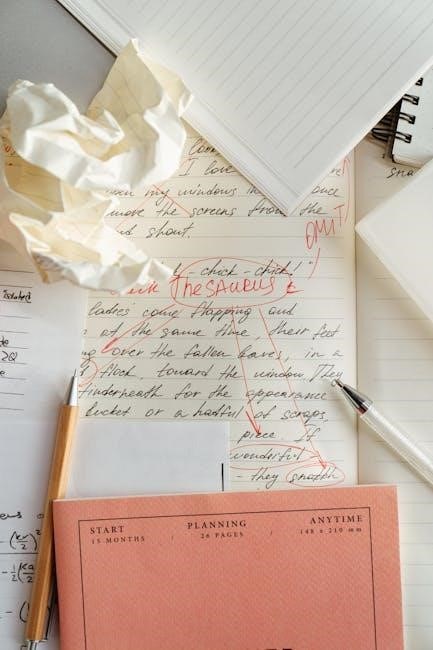
Scrooge’s character arc is central to the novel’s impact. Initially presented as miserly and isolated, his journey towards redemption is meticulously crafted by Dickens. Analyse his interactions with the Ghosts of Christmas Past, Present, and Yet to Come, noting how each encounter challenges his perspectives and forces self-reflection.
Consider the contrasting characters of Bob Cratchit and Tiny Tim, who represent the virtues of kindness and resilience in the face of adversity. Explore how these characters serve as foils to Scrooge, highlighting his initial flaws. Furthermore, examine the roles of the other spirits and minor characters, such as Fred and Fezziwig, in shaping Scrooge’s transformation.
Revision Resources and Past Papers
Effective revision hinges on utilizing available resources. Physics and Maths Tutor (PMT) provides comprehensive AQA English GCSE (9-1) revision materials, including summary notes, character profiles, and theme guides. These resources are invaluable for consolidating understanding and identifying knowledge gaps.
Accessing AQA past papers is crucial for exam preparation. Familiarize yourself with question formats and time constraints by practicing under timed conditions. Utilize the accompanying mark schemes to understand examiner expectations and identify areas for improvement. PMT also offers exam and essay writing guides to refine your technique.
Don’t underestimate the power of focused practice and targeted revision using these readily available tools!
Utilising Physics and Maths Tutor (PMT) Resources
PMT offers a wealth of resources specifically tailored for AQA GCSE English Language (9-1) revision. These include detailed summary notes, providing concise overviews of key concepts and texts. Character profiles offer in-depth analyses, aiding comprehension of literary works like ‘A Christmas Carol’.
Theme guides help you explore the underlying ideas and messages within texts, crucial for analytical responses. PMT also provides glossaries to clarify unfamiliar terminology and flashcards for efficient knowledge recall. Furthermore, their exam and essay writing guides offer practical advice on structuring responses and improving technique.
Leverage these free resources to build a strong foundation and maximize your exam potential!
Accessing AQA Past Papers and Mark Schemes
Practicing with AQA past papers is essential for effective revision. Familiarize yourself with the exam format, question types, and time constraints by working through previous assessments. This builds confidence and identifies areas needing further attention.

Crucially, always review the corresponding mark schemes. These provide invaluable insight into the examiners’ expectations, revealing how marks are awarded for different responses. Analyze high-scoring answers to understand the qualities of successful work and identify areas for improvement in your own writing.
AQA’s website is the primary source for past papers and mark schemes. Utilize these resources strategically to refine your exam technique and maximize your potential for achieving a high grade.
Improving Vocabulary and Grammar
A strong vocabulary and accurate grammar are fundamental to success in AQA English Language. Expanding your word choices allows for more precise and nuanced expression, enhancing the impact of your writing. Regularly read widely to encounter new vocabulary in context, noting down unfamiliar words and their meanings.
Focus on grammatical accuracy, paying attention to sentence structure, punctuation, and correct usage of tenses. Practice identifying and correcting common grammatical errors in your own work. Utilize online resources and grammar guides to reinforce your understanding of key concepts.
Consistent practice and attention to detail will significantly improve your linguistic skills, leading to clearer, more sophisticated, and persuasive communication in your exam responses.

Final Revision Checklist
Ensure comprehensive preparation with this final revision checklist. First, review all key assessment objectives for both Paper 1 and Paper 2, understanding the weighting of each section. Next, practice timed exam conditions using AQA past papers, focusing on planning and time management strategies.

Thoroughly revise key reading skills, including analysing language and structure, and identifying writer’s perspectives. Similarly, revisit essential writing techniques, such as crafting effective openings and developing coherent arguments.
Finally, consolidate your vocabulary and grammar knowledge, and review any areas of weakness identified during practice. Utilize PMT resources for targeted revision and ensure you feel confident and prepared to demonstrate your skills on exam day!